
Face-to-face
Uzbek interpreters on site for appointments, hearings and meetings.
Uzbek is the most widely spoken Turkic language of Central Asia. It is written in Latin or Cyrillic script in Uzbekistan and in Arabic-based script in Afghanistan.
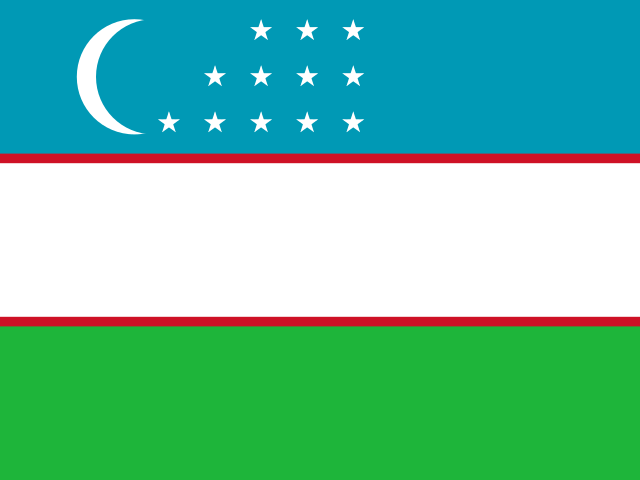
Oʻzbek tili
uzbUzbek belongs to the Karluk branch of the Turkic family, and its closest relative is Uyghur. It is the state language of Uzbekistan and is spoken by large communities in northern Afghanistan, Tajikistan, Kyrgyzstan, Kazakhstan, Turkmenistan and Russia.
Uzbek has two main forms: Northern Uzbek, the standard language of Uzbekistan, and Southern Uzbek, spoken in Afghanistan. Afghan Uzbek has more Farsi vocabulary and different writing conventions. Uzbek dialects vary considerably, and some, such as those of Khorezm, are closer to Oghuz Turkic.
Uzbekistan is home to large Tajik, Russian, Kazakh and Karakalpak communities, and Karakalpak, a Kipchak Turkic language, has official status in the Republic of Karakalpakstan. A person from Uzbekistan may therefore need a language other than Uzbek.
Communities abroad are not shown. Point to an area to see its name.
Uzbek interpreters on site for appointments, hearings and meetings.
Secure video interpreting when people are in different places.
Telephone interpreting 24 hours a day, 365 days a year.
Certified Uzbek translation accepted by UK authorities.
Uzbek is the state language of Uzbekistan and is spoken by large communities in northern Afghanistan, Tajikistan, Kyrgyzstan, Kazakhstan, Turkmenistan and Russia. SILA Linguists® provides Uzbek interpreters and Uzbek translators for courts, police, immigration services, healthcare providers, schools and companies in textiles, cotton and energy in Britain, North America, Australia, New Zealand and further afield. Northern Uzbek from Uzbekistan and Southern Uzbek from Afghanistan differ in vocabulary and writing, and a person from Uzbekistan may actually speak Tajik, Russian, Kazakh or Karakalpak at home, so we check before booking.
Afghan Uzbeks often also speak Dari and use more Farsi vocabulary, while people from Uzbekistan often speak Russian, and some from Samarkand and Bukhara speak Tajik at home. Dialects vary considerably, and Khorezm speech is closer to Oghuz Turkic. We match the Uzbek interpreter to the client's country and region.
Our face-to-face Uzbek interpreters attend police interviews, criminal and family courts, asylum interviews, hospital appointments and school meetings. Uzbek phone interpreting is staffed through nights, weekends and holidays, and video meetings can run on the SILA Linguists® app or on software you already license. Trade delegations, textile buyers and energy companies can book consecutive or simultaneous interpreters, including remote simultaneous interpreting for online events.
Uzbekistan officially uses a Latin alphabet, but Cyrillic remains common in everyday life and older documents, and Afghan Uzbek is written in Arabic-based script. In the Latin alphabet, oʻ and gʻ use the modifier letter ʻ, and we use the correct character in names and official text rather than a straight apostrophe.
We translate birth and marriage certificates, diplomas, court papers, medical records, contracts, certificates of origin and technical documents. When a document needs certifying, we attach a signed declaration of accuracy, accepted by UK authorities such as Home Office caseworkers, courts and universities, and by employers.
Police interviews, recorded calls, voice messages and research interviews are written out in Uzbek with timings and rendered into English, with Russian, Tajik or Dari passages labelled. For asylum cases where origin is uncertain, SILA Linguists® can arrange LADO to help distinguish Uzbek speakers from Uzbekistan and from Afghanistan.
Our vetted, trained and qualified Uzbek linguists can support immigration and asylum services, courts and police, NHS and private healthcare, education providers, and businesses in cotton, textiles, energy and trade. One coordinator follows your Uzbek work from request to delivery. Every linguist signs a non-disclosure agreement, and UK GDPR governs the handling of personal data. For long-running matters we try to keep the same Uzbek interpreter throughout, which helps clients feel at ease and keeps terminology consistent from the first appointment to the final hearing.
Choose a language to see its page. Getting the right variety matters: tell us the region or dialect if you know it.
Explore more middle eastern and central asian or see all languages A to Z.
Our bookings team will confirm the details with you and arrange the right linguist. Have the language (and dialect, if you know it), the type of assignment and the date ready.