
Face-to-face
Dari interpreters on site for appointments, hearings and meetings.
Dari is the name used in Afghanistan for its standard variety of Farsi. It is mutually intelligible with Farsi from Iran, but differences in vocabulary, pronunciation and official terminology mean Afghan clients are usually best served by a Dari interpreter.
دری
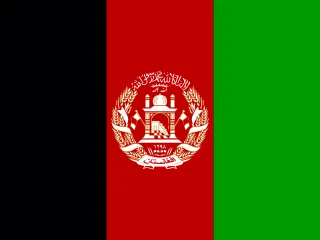
prsDari and Farsi are two standard varieties of one language. The name Dari has been the official term for the language in Afghanistan since the twentieth century. Afghanistan's previous constitution named Dari and Pashto as the official languages, and both remain the main languages of administration. Most Afghans, whatever their first language, use Dari as a common language, and many speakers simply call it Farsi. Dari and Farsi are closely related standards, and each has its own conventions.
Dari keeps some features that Farsi has changed, for example certain vowel sounds, and it uses a different stock of everyday and administrative words. Words for common items, kinship terms, numbers in speech and many government and legal terms differ. Afghan speakers usually understand Farsi through media, but Iranian listeners may not understand regional Afghan expressions.
Dari is spoken across Afghanistan, with regional accents from Kabul, Herat, the north, and Hazaragi in the central highlands, which some speakers consider a distinct variety. Large Afghan communities live in Pakistan, Iran, Europe, North America and Australia.
Communities abroad are not shown. Point to an area to see its name.
Dari interpreters on site for appointments, hearings and meetings.
Secure video interpreting when people are in different places.
Telephone interpreting 24 hours a day, 365 days a year.
Certified Dari translation accepted by UK authorities.
For people from Afghanistan, Dari is the common language of daily life, administration and schooling, whatever their mother tongue, and many simply call it Farsi. SILA Linguists® provides Dari interpreters, translators and transcribers for asylum and resettlement services, courts, healthcare, schools and charities in the UK, North America, Australia, New Zealand and beyond. We book a Dari interpreter, not an Iranian Farsi one, unless the client says otherwise, because kinship terms, numbers, place names and official vocabulary differ in ways that matter in testimony.
Face-to-face Dari interpreting supports Home Office interviews, immigration tribunals, police interviews, criminal and family courts, GP and hospital appointments, mental health assessments, school meetings and housing visits. Dari interpreters can join by phone at any hour, and video sessions take place on the SILA Linguists® app or a familiar platform such as Teams.
Tell us if the client is Hazara or from the central highlands, so we can consider an interpreter familiar with Hazaragi. Gender matching is often preferred by Afghan clients, especially for gynaecology, maternity care and interviews about personal experiences, and we arrange a female or male Dari interpreter on request. For resettlement briefings and training we also provide consecutive, simultaneous and remote simultaneous interpreting.
Dari uses the same Arabic-based letters as Farsi, but spelling and vocabulary differ, so translations for Afghan readers are prepared by Afghan translators. Afghan documents normally use the Solar Hijri calendar with Afghan month names, and some recent ones use the lunar Hijri calendar; we convert dates carefully and keep the original alongside.
We translate tazkiras, marriage certificates, school and university records, court papers, medical reports and letters, and each certified Dari translation is signed off as accurate, accepted by UK authorities such as Home Office caseworkers, the courts and admissions teams, and by employers. Afghan tazkiras and certificates for the United States, Canada or Australia can be certified to their standards, including NAATI-certified translation for Australia. Into Dari, we produce health leaflets, school letters and community guidance.
We transcribe Dari interviews, voice messages and recorded evidence with time stamps and an English translation, noting switches into Pashto or English. SILA Linguists® also offers LADO for Dari speakers in asylum cases where origin or nationality is in question. Recordings from Afghanistan often contain background voices, regional expressions and place names that only an Afghan linguist will recognise, and we flag anything inaudible or uncertain rather than guessing.
Our vetted, trained and qualified Dari linguists can support asylum and resettlement teams, solicitors, police and probation, NHS trusts, mental health services, local authority children's services, schools and refugee charities. You get one project team, vetted linguists, and strict confidentiality backed by agreements and UK GDPR. Dari interpreters can assist refugee and asylum hearings, resettlement agencies, hospitals and schools in the United States, Canada and Australia.
Choose a language to see its page. Getting the right variety matters: tell us the region or dialect if you know it.
Explore more middle eastern and central asian or see all languages A to Z.
Our bookings team will confirm the details with you and arrange the right linguist. Have the language (and dialect, if you know it), the type of assignment and the date ready.