
Face-to-face
Haitian Creole interpreters on site for appointments, hearings and meetings.
Haitian Creole, Kreyòl ayisyen, is the language spoken by almost the entire population of Haiti and by large Haitian communities abroad. We provide Haitian Creole interpreters and translators for healthcare, legal, immigration and humanitarian work.
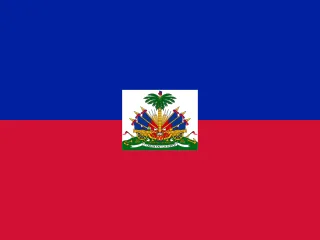
Kreyòl ayisyen
hatHaitian Creole emerged in the colony of Saint-Domingue in the seventeenth and eighteenth centuries, among enslaved Africans and French colonists. Most of its vocabulary comes from French, but its grammar is its own, and it also draws on West African languages such as Fon and Kikongo, as well as on Spanish, English and Taíno. It is a full language in its own right, not a dialect of French, and French speakers who have not learned it understand it only partially.
Haiti's constitution recognises Creole as the language that unites all Haitians and makes it an official language alongside French. Creole is the everyday language of virtually everyone in Haiti, while French is spoken fluently by a smaller, mainly educated, part of the population. Creole is increasingly used in schools, media and public life.
The standard spelling is phonetic: each sound has one spelling, using letters such as è, ò and combinations such as ch, ou and an. Regional speech differs between the north (around Cap-Haïtien), the central area including Port-au-Prince, and the south, mostly in pronunciation and some vocabulary, and the Port-au-Prince variety is the most widely understood.
Large Haitian communities live in the United States, Canada (especially Montreal), France, French Guiana, Guadeloupe and Martinique, the Dominican Republic, the Bahamas, Chile and Brazil, and many people outside Haiti also speak English, Spanish or Portuguese.
Communities abroad are not shown. Point to an area to see its name.
Haitian Creole interpreters on site for appointments, hearings and meetings.
Secure video interpreting when people are in different places.
Telephone interpreting 24 hours a day, 365 days a year.
Certified Haitian Creole translation accepted by UK authorities.
SILA Linguists® provides Haitian Creole interpreting, translation and transcription for hospitals, courts, schools, immigration advisers and humanitarian organisations in the UK, North America, Australia, New Zealand and beyond. Kreyòl is the everyday language of virtually everyone in Haiti and of large communities in the United States, Quebec, France, the Dominican Republic, Chile and Brazil. It is a language in its own right, not a dialect of French, and many Haitians understand French only partly, so we never assume French will do.
Our Haitian Creole interpreters attend medical consultations, maternity appointments, mental health assessments, family court hearings, solicitors' meetings and school meetings in person. Phone lines for Kreyòl stay open through nights, weekends and bank holidays, and screen-based sessions on the SILA Linguists® app, or on Teams, Zoom or similar, give rapid access to interpreters across time zones, which matters during public health campaigns and disaster response.
We ask where the client grew up and where they have lived since. Speech from Cap-Haïtien, Port-au-Prince and the south varies mainly in pronunciation and some vocabulary, while clients who spent years in Chile or the Dominican Republic may mix in Spanish, and those from Quebec Canadian French terms. In healthcare, interpreters check understanding of dosage instructions and appointment details, because French-derived medical words on forms can be unfamiliar to people with limited schooling. Health beliefs and religious practice are rendered accurately and neutrally, and patients may ask for a woman or a man to interpret.
Haitian birth certificates, marriage records and court judgments are mostly issued in French, although Creole appears more often than it used to. We check each page, then deliver a certified English version, signed and declared accurate and accepted by UK authorities, whether for a visa application, a family court bundle or a university admissions file. French or Creole papers needed in the United States or Canada are certified to the authority's rules, by a provincially certified translator in Canada or with a certificate of accuracy for US immigration.
For patient leaflets, consent forms, school letters, public notices and emergency information, Kreyòl reaches far more people than French. Our translators use the official phonetic spelling, with è, ò, ch, ou and an, write in plain language, and can produce audio or video versions for readers with limited literacy.
We transcribe Haitian Creole interviews, voicemails, community radio and video with time stamps and English translation, and subtitle campaign films for Haitian audiences. If an asylum decision hinges on whether someone really grew up in Haiti, SILA Linguists® can commission a LADO assessment of their speech from specialist analysts.
Our vetted, trained and qualified Haitian Creole linguists can support NHS trusts and public health bodies, immigration advisers, criminal and family courts, schools, children's services, charities and disaster-relief agencies. A dedicated coordinator handles each request end to end, and every interpreter and translator is vetted, signs a non-disclosure agreement and treats personal data in line with UK GDPR. Haitian Creole interpreters can support immigration courts and attorneys in the United States, refugee and immigration proceedings in Canada, and hospitals and schools in both.
Choose a language to see its page. Getting the right variety matters: tell us the region or dialect if you know it.
Explore more south and latin american or see all languages A to Z.
Our bookings team will confirm the details with you and arrange the right linguist. Have the language (and dialect, if you know it), the type of assignment and the date ready.