
Face-to-face
Filipino interpreters on site for appointments, hearings and meetings.
Filipino is the national language of the Philippines and, with English, one of its two official languages. It is the standard used in national education, government and media, and the language most Filipinos share whatever their regional mother tongue.
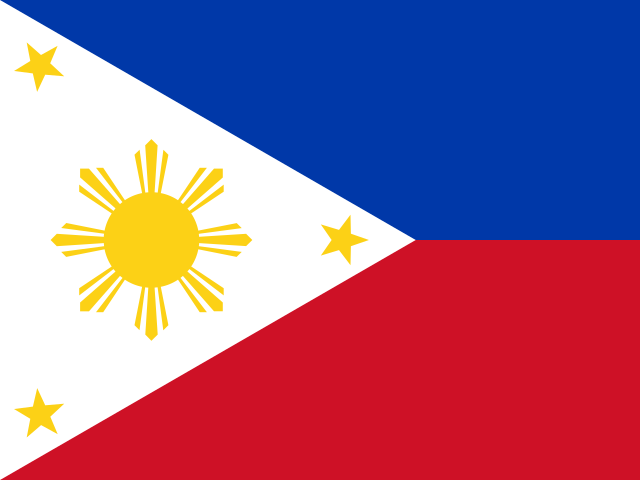
Filipino
filUnder the Philippine Constitution, Filipino is the national language, and it has an official standard. Filipino is based on Tagalog, the language of Manila and the surrounding provinces, but as the national standard it takes in vocabulary from other Philippine languages, Spanish and English, and uses an expanded 28-letter alphabet that adds letters such as F, J, V, Z and Ñ.
Filipino and Tagalog are generally regarded as the same language in structure; the difference is mainly one of role. Filipino is the national standard learned at school by speakers of Cebuano, Ilocano, Hiligaynon and the country's many other languages, while Tagalog names the regional mother tongue of central and southern Luzon. Our Tagalog page covers Tagalog as a regional first language.
Communities abroad are not shown. Point to an area to see its name.
Filipino interpreters on site for appointments, hearings and meetings.
Secure video interpreting when people are in different places.
Telephone interpreting 24 hours a day, 365 days a year.
Certified Filipino translation accepted by UK authorities.
Filipino, the national language of the Philippines, is understood by almost everyone who has been to school there, whatever their mother tongue. That makes it the language of choice for many nurses, carers, seafarers and families across the Filipino diaspora in the Middle East, North America, Europe, Australia and Asia. SILA Linguists® provides Filipino interpreters and translators for healthcare employers, unions, courts, immigration advisers and public bodies, and we will tell you when a Cebuano, Ilocano or Tagalog specialist would serve a particular client better.
Respect for authority runs deep in Filipino culture, and clients can be reluctant to admit they have not understood a doctor, a manager or a judge. Our Filipino interpreters check comprehension tactfully, using respectful particles such as po and opo, so nobody loses face and nothing important is missed. Everyday speech often slips into Taglish, and our linguists follow the client's style while making sure technical terms land clearly.
Face-to-face Filipino interpreting is available for hospital wards, nursing and care home settings, employment tribunals, solicitors' meetings and family visa interviews. Telephone interpreting is on hand 24 hours a day, 365 days a year, and video interpreting runs through the SILA Linguists® app or the platform your team prefers. Consecutive and remote simultaneous interpreting are available for staff briefings, union meetings and community events.
Philippine civil documents, including PSA birth and marriage certificates, are normally issued in English, so certified translation is more often needed for messages, letters and statements written in Filipino. We translate those into English with a signed statement of accuracy, accepted by UK authorities such as courts, tribunals and the Home Office, and by employers. Philippine documents going to American, Canadian or Australian authorities are certified in the form each one specifies, from a certificate of accuracy to NAATI certification.
Our translators also work into Filipino: employment contracts and staff handbooks, health and safety guidance, recruitment information, healthcare leaflets, consumer product text and public information for Filipino communities. We follow standard Filipino spelling and choose vocabulary a nationwide readership will understand. Baybayin appears in logos and cultural design, and we can advise on its use, but it is not used for everyday or official text.
Recorded workplace investigations, call recordings, video testimonies and research interviews can be transcribed in Filipino with time stamps and translated into English. For training films and public information videos, we provide Filipino subtitles or translate Filipino-language video for English-speaking audiences.
Our vetted, trained and qualified Filipino linguists can support hospitals and care providers employing Filipino staff, recruitment agencies, employment lawyers and trade unions, seafarer welfare organisations and shipping companies, immigration advisers, family courts, councils and community organisations. With SILA Linguists® you have one project team, vetted interpreters and translators, signed confidentiality agreements and UK GDPR-compliant data handling on every booking. Filipino interpreters can assist nurses, carers and families in the United States, Canada and Australia with immigration interviews, employment hearings and health appointments.
Choose a language to see its page. Getting the right variety matters: tell us the region or dialect if you know it.
Explore more asian languages or see all languages A to Z.
Our bookings team will confirm the details with you and arrange the right linguist. Have the language (and dialect, if you know it), the type of assignment and the date ready.