
Face-to-face
Belarusian interpreters on site for appointments, hearings and meetings.
Belarusian is an East Slavic language written in Cyrillic, used in Belarus alongside Russian. SILA Linguists provides Belarusian interpreters and translators for immigration, legal, healthcare and business settings in the UK, North America, Australia, New Zealand and beyond.
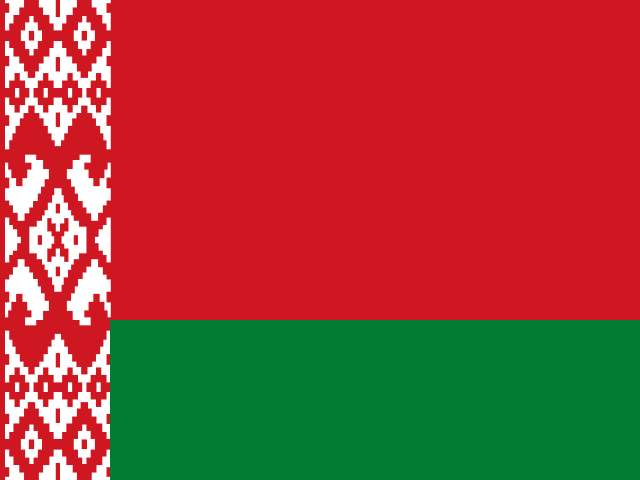
беларуская мова
belBelarusian is one of the two official languages of Belarus, the other being Russian. It belongs to the East Slavic branch together with Russian and Ukrainian, and it is closest to Ukrainian in vocabulary. There are Belarusian-speaking minorities in north-eastern Poland, Lithuania and Latvia, and a growing diaspora in Poland, Lithuania, Germany, the UK and other countries.
In daily life in Belarus, Russian is widely used, and many people move between Belarusian, Russian and a mixed vernacular often called trasianka. Two spelling norms exist: the official orthography, which has been revised in recent years, and the classical orthography known as taraškievica, which is common in some publications and diaspora media. Belarusian has also been written in a Latin alphabet (łacinka), which is still seen on some signage and in transliteration.
The Belarusian Cyrillic alphabet includes letters not used in Russian, such as і and ў, and it does not use и or щ.
Communities abroad are not shown. Point to an area to see its name.
Belarusian interpreters on site for appointments, hearings and meetings.
Secure video interpreting when people are in different places.
Telephone interpreting 24 hours a day, 365 days a year.
Certified Belarusian translation accepted by UK authorities.
Belarusian is one of the two official languages of Belarus, an East Slavic language closest to Ukrainian in vocabulary, with minorities in north-eastern Poland, Lithuania and Latvia and a growing diaspora in Poland, Lithuania, Germany, the UK and elsewhere. Many people in Belarus move between Belarusian, Russian and the mixed vernacular called trasianka. SILA Linguists® provides Belarusian and Russian interpreters, translators and transcribers for asylum and immigration casework, solicitors and courts, healthcare, universities, human rights organisations and business, and asks each client which language they prefer.
Because most Belarusian speakers also know Russian, we never assume. Some people want to speak Belarusian for personal or political reasons; others are more comfortable in Russian. We provide either, and some of our linguists work in both, which helps when a client moves between them in the same conversation.
Our Belarusian interpreters are prepared for immigration and asylum interviews, solicitors' meetings and court hearings, hospital and community health appointments, and interviews conducted by human rights organisations and NGOs. They attend in person, take calls at any hour, and join video sessions through our SILA Linguists® app or the platform your service has approved. For academic conferences, NGO briefings and business negotiations we provide consecutive, simultaneous and remote simultaneous interpreting.
Names are a frequent source of error. The same person may appear as Аляксандр in Belarusian and Александр in Russian, with different Latin transliterations on passports and older documents, so we ask for the passport and match its spelling. We translate according to the official orthography unless the source text uses the classical spelling, taraškievica, and you ask us to keep it.
Certified Belarusian translations of birth and marriage certificates, diplomas, academic transcripts and court documents carry a signed and dated statement of accuracy, accepted by admissions offices, the Home Office, courts and other UK authorities, which is essential for credential recognition. Belarusian papers for North American authorities are certified the way each one specifies. For businesses, we translate contracts and trade correspondence, which often needs both Belarusian and Russian versions, and we keep terminology aligned across the two.
Recorded testimony, interviews and audio evidence in Belarusian or Russian, or a mixture of both, are transcribed with time references, then translated into English, with each language clearly marked. Our subtitlers can also prepare video material for human rights organisations and researchers.
Our vetted, trained and qualified Belarusian linguists can support asylum and immigration practitioners, solicitors and courts, hospitals, universities and credential assessors, human rights organisations and NGOs, and businesses trading in the region. Every request stays with one SILA Linguists® team, and your data is protected under confidentiality agreements and UK GDPR. Belarusian interpreting is also available for immigration hearings, courts and hospitals in the United States and Canada.
Choose a language to see its page. Getting the right variety matters: tell us the region or dialect if you know it.
Explore more european languages or see all languages A to Z.
Our bookings team will confirm the details with you and arrange the right linguist. Have the language (and dialect, if you know it), the type of assignment and the date ready.